Кто такой представитель по развитию продаж (SDR) и почему он нужен вашему бизнесу?
В традиционном мире продаж фокус направлен на переговоры и закрытие сделок. Тем временем представители по развитию продаж (SDR) в основном остаются в темноте. Тогда как важность их деятельности для бизнеса невозможно переоценить.
Sales Development Representative (SDR)
Концепция развития продаж через привлечение к процессу SDR становится все более популярной и даже жизненно важной для современных торговых компаний.
На протяжении многих лет отдел по развитию продаж называли по-разному: команда по развитию бизнеса, партнеры по продажам, отдел по развитию лидов и т. д. Хотя каждая из этих ролей имеет несколько другое функциональное определение, все они работали рука об руку с лицами в компании, ответственными за закрытие сделок.

В сегодняшней практике команды по развитию продаж — это специализированная группа, которая полностью сосредоточена на начальном этапе цикла продаж: назначение квалифицированных встреч и демонстраций продуктов компании.
Эти команды должны быть сфокусированы на оптимизации собственных процессов. Они не участвуют в процессах активных продаж, не закрывают сделки. Ваши SDR должны искать перспективы и только перспективы. Все время.
Когда это происходит, это эквивалентно 1 + 1 = 3, и вы получаете максимально квалифицированные встречи с потенциальными клиентами.
А теперь давайте ознакомимся с главными задачами представителя по развитию продаж:
— Квалифицировать потенциальных клиентов из маркетинговых компаний по возможности заключения сделки;
— Контактировать с потенциальными и перспективными клиентами через холодные звонки и электронные письма;
— Представлять компанию потенциальным и перспективным клиентам;
— Определять потребности и предлагать соответствующие продукты/услуги;
— Создавать долгосрочные доверительные отношения с клиентами;
— Проактивно искать новые возможности для бизнеса на рынке;
— Создавать договоренности о встречах или звонках между клиентами и менеджерами по продажам.
Стоит ли объяснять в чем разница между менеджером по продажам и представителем по развитию продаж?
Именно Sales Development Representative является тем ключевым игроком в компании, который обеспечивает менеджеров по продажам потенциальными клиентами, “разогретыми” до готовности обсуждать условия выгодного контракта.
Технология персонального маркетинга от Space.ua поможет вам:
Sales Development Representatives (SDRs)
A complete guide to building an ace SDR team
Sales Development Representatives (SDRs)
Who are SDRs? Do they handle inbound or outbound prospecting? What’s the difference between an SDR and BDR? If you’re looking to hire salespeople, or in the process of building an effective sales strategy, you would have come across the term sales development representatives (SDRs). And most probably you would be asking some of those questions too. In this page, you’ll find answers to these questions and more:

SO, WHAT IS AN SDR?
Sales Development Representatives (SDRs) or Business Development Representatives (BDRs) are inside sales representatives who focus solely on sales prospecting. Unlike sales executives (quota-carrying salespeople) who close new deals, SDRs reach out to new leads, qualify them and push them further down the sales funnel.
SDRs are equipped with well-researched information about the prospect and company before getting in touch with them since they are the first face of your company. They have a fair understanding about the industry, sales process, and competition to make meaningful conversations.
SDRs call and email prospects, take them through the early stages of the sales pipeline, and get them ready to talk with a closer. The Key Performance Indicator (KPI) is based on the number of qualified opportunities, or sales qualified leads (SQL) they garner every month.
Having an SDR team also ensures that your sales executives are spending most of their time on qualified leads and achieving targets, rather than engaging in prospecting.
Role of an SDR
| Inbound sales prospecting | Outbound sales prospecting |
|---|---|
| Nurture leads who have shown interest in your solution and have already engaged with your company through its marketing channels. | Reach out to potential customers who have never engaged with your company’s product or solution, i.e., cold prospecting. |
The role of an SDR is similar to that of a consultant where they actively listen and provide an appropriate solution to prospects. SDRs understand the prospect’s business model; analyze if your product is a good fit, and educate leads on how your solution can help solve and improve their business.
To understand better, here are the roles and responsibilities of an SDR.
Research, identify and prospect for new customers
SDRs should have good knowledge of the prospect’s industry, sales process, competition and compelling events to make effective and meaningful conversations.
Make more calls and send more emails
SDRs should reach out to potential leads, or promptly follow up with those who have inquired about your company and offerings via phone, email and social media.
Setup quality meetings and appointments
SDRs should write down the list of smart questions to ask during the call, or create a sales call script to qualify or disqualify leads, and to setup quality meetings with sales executives.

Essential SDR Handbook: Get sales call, voicemail, and email templates for free
Sales development representative job description
If you’re looking to hire an SDR and require a job description, the one below is a great example to get you started. Of course, you can add your specifications and requirements, and make it your own.
The responsibilities of an outbound Sales Development Representative include:
Job description
We’re looking for a results-driven sales development representative to actively seek new business opportunities, engage and build relationships with potential customers. You will provide complete and appropriate solutions for every potential customer to boost top-line revenue growth, customer acquisition levels, and profitability.
Responsibilities
Requirements
Skills and qualities of an SDR
SDRs have to be quick on their feet, excel in having online conversations, master in tools, be great content finders, have a positive outlook that isn’t put down by a bad interaction. Here are some of the skills that every SDR in your team should possess.
Prospecting skills
Art of listening
SDRs should actively listen to each conversation with the prospect, interrupting when they need clarification and ask probing questions that allow them to explore the buyer’s mind.
Product knowledge
Sales representative should have adequate knowledge about the features, benefits, and weakness of your product before creating effective pitches and connecting customer’s needs to your solution.
Webinars
Webinars require people to share their email ID, which makes it an ideal lead gen activity. Timely webinars, with relevant topics and quality speakers, can build a brand around your business.
Time management
Ability to optimize time improves sales productivity and creates an environment for high performance. This soft skill coupled with a CRM Software and other technologies deliver significant ROI for any business.
Communication skills
Good at building rapport and starting a conversation over phone and email. Effective communication also helps prevent objections by providing clarity into how your solution can solve business problem.
Looking for a CRM for your SDR team?
Why you need an SDR team
Healthy sales pipeline
With specific sales representatives to handle prospecting, you not only have a well-defined sales process but also a fast moving pipeline, clear of junk and dead deals.
Increases growth
With two separate sales roles, your sales representatives have time to follow up with warm and cold leads, cross or upsell to existing customers and engage with new customers.
Increase productivity
SDRs unburden sales executives from prospecting, allowing them to solely focus on closing deals, thereby saving time and increasing their productivity.
When you should hire an SDR team
When you are a growing business, you probably have one or two salespeople handling end-to-end sales. But as your business scales, hiring just a salesperson won’t work anymore. With leads pouring into the top of the funnel and an unclear sales process, it becomes increasingly challenging for salespeople to prospect and close deals. With leads falling through the cracks and your sales pipeline filled with junk deals, there are huge chances that your competition will surpass you in their ability to woo leads effectively; causing harm to the health of your company.
You know you need to hire an SDR team when,
SDRs vs Sales Executives
In the table below, you’ll find a clear distinction between SDRs and sales executives.
Tools used by SDRs
Sales development representatives have to work hard to setup qualified leads and pass them on to sales executives to close the deals. However, that’s not the only thing SDRs have on their plate. Sales representatives also have to research about the prospect before getting in touch with them, follow up with the cold and warm leads and reply to the ones who have shown interest.
Since the entire process of sales prospecting can be tiring and time-consuming, SDRs need productivity tools that can speed up their process. These tools, of course, need to be simple and user-friendly because SDRs can’t afford to lose their time on training and customizations.
Let’s take a quick look at 3 of the must-have tools that help increase sales representative’s productivity.
LinkedIn Sales Navigator
SDRs need a wide range of sales productivity tools that can help them achieve what they want without wasting time and effort. And LinkedIn Sales Navigator is one that no SDR should live without. SDRs have to set up preferences using which, LinkedIn Sales Navigator provides lead recommendations. SDRs can then create sales leads list, find the right prospect to connect, and reach out to them via InMails. LinkedIn Sales Navigator is great to find and get in touch with prospects even before the initial conversations.
Technographic tools
For B2B sales, you need to know what technologies your prospects use. And free tools like Datanyze, BuiltWith and Ghostery are great at doing just that. Out of these, Datanyze tracks a much broader aspect of technologies and has the ability to give company information like employee count, revenue range, industrial and social activities. With technographic tools, SDRs can approach prospects with meaningful data and start an effective conversation.
CRM Software
Since a majority of the SDRs work revolves around prospects and engaging with them, sales representatives need a centralized database to store and access lead data as and when required. A CRM is a great tool to do that and a lot more. A CRM is also a sales engagement platform that allows SDRs to create and send campaigns, track the email open and click rates, make phone calls and set up appointments and meeting with sales executives.
SDR в продажах: как избежать самых частых ошибок
Обычно источником этой концепции считают книгу Predictable Revenue Аарона Росса, который применил эту концепцию в Sales Force и значительно увеличил результаты продаж.
Но если копнуть еще глубже, то сам же Росс рассказывает в своей статье The History of Professional Selling, что специализация появилась в 1870 году в сфере продажи страховок. В то время страховки оплачивались по подписке и продавец должен был и привлекать новых, и ходить собирать взносы с тех, кому уже продал ранее. В конце концов у успешных продавцов почти не оставалось времени на новые продажи, так как все время они занимались сбором денег у тех, кому продали раньше. Чтобы решить эту проблему в индустрии впервые появилось разделение на Охотников и Собирателей. Концепция себя отлично зарекомендовала и стала применяться не только там. Но в продажах SaaS активно не использовалась до 2011 года. Именно тогда г-н Росс внедрил ее у себя и потом написал книжку, которая стала стандартом отрасли SaaS продаж.
Тем не менее при очевидной логичности решения, на ранних этапах введение этой роли приносит одну головную боль. Типичные проблемы у тех, кого я консультировал такие:
1. SDR назначает такие встречи, от которых Account Executives ( AE, те, кто закрывает клиентов) отказываются из-за их низкого качества.
На то может быть несколько причин.
2. SDR делает мало встреч
Тут опять же несколько причин.
1) Их руководитель ежедневно не следит за их активностью по звонкам.
2) SDRам не предоставляют базу и они тратят много времени на поиск и проверку контактов.
3) Они не хотят звонить вхолодную и стараются использовать только соц.сети, которые не дают нужного результата.
4) От них требуют не просто продать встречу, но еще и узнать тонну информации от «холодного» клиента, от чего клиенты не в восторге.
3. AE забивает на клиентов
Такое происходит, если ему ставят и ставят встречи, поэтому на тех, кто сразу не готов оплатить счет, он не хочет тратить время. Зачем, если завтра будут другие?
4. Проблемы с наймом
Проявляется это в том, что ищут и SDR и АЕ одновременно, но первым находят SDR. Кому ему ставить встречи не понятно. Вот и думают, чем его занять, пока не найдут и не обучать АЕ.
Если вернуться к статье г-на Росса, главного источника теории о разделении, то можно прочитать
Aaron saw similar inefficiencies: Account Executives/Closers spending disproportionate amounts of time prospecting for leads instead of closing new business. This insight was followed by the creation of the additional specialized sales role, the Sales Development Rep (SDR).
Главное здесь то, что на тот момент, когда он задумал эту идею в компании уже были те, кто успешно делал и то и другое, и искал лиды и закрывал их. И именно поэтому, то, что сделал Росс лишь повысило эффективность уже существующего процесса. Но процесс был и он был отстроен, был фундамент.
Если вы решили вывести SDR, то ваша задача обеспечить им знания о том, кому и куда звонить. Именно ваша роль как руководителя в том, чтобы описать портрет идеального покупателя. В нем должны быть какие-то вещи, которые можно проверить еще до звонка и сделать это может не только SDR, но и AE, чтобы избежать разногласий о том, целевой лид или нет.
-трафик на сайте от X уников на сайт в месяц
-наличие или отсутствие платной рекламы
— число сотрудников в компании
— наличие или отсутствие кодов конкурентов
Здесь не должно быть никаких непрозрачных штук вроде «проявленной заинтересованности». Лид должен соответствовать портрету и если это так, это работа АЕ его закрыть, выявив все что надо.
Тем не менее, могут быть ситуации, когда вроде как целевой лид таким не является. Каждый такой лид нужно разбирать, чтобы понять, в чем причина. Идеально создать оценочный комитет: группу из руководителя отдела продаж, руководителя отдела SDR и руководителя аккаунтов, чтобы рассматривать, что пошло не так и как можно пофиксить.
1) Проверить есть ли он в CRM
2) Если нет, завести его
3) Найти и добавить в карточку номер с сайта
4) Позвонить и узнать, что номер не работает
он тратит уйму времени зря. Ваша задача стараться сделать все, чтобы он только звонил: это значит, что база для прозвона должна быть вычищена.
Первый этап чистки базы
— удаляем существующих клиентов
— удаляем потенциальных клиентов, с кем уже работают АЕ
— удаляем тех, с кем уже работают SDR
— Удаляем тех, кто не подходит по портрету идеального клиента
— Удаляем тех, кому последний квартал уже звонили SDR
Удаляем неактивные номера руками или автоматом. Именно последним занимаются те же банки, когда звонят и сбрасывают звонки. Так они проверяют живой номер или нет, чтобы не тратить время продавцов на прозвон неактивных номеров.
Выход на контактное лицо
Представиться кто и откуда
Перед звонками, у SDR также должно быть перед глазами написанные варианты ответов на самые частые возражения. Да, я сторонних скриптов. Они отлично помогают пока человек не освоится настолько, чтобы от них отказаться. Кстати, в фильме Волк с Уолл-Стрит продавцы тоже используют скрипты)
Кстати, в отличие от запада у нас не работают паузы. Надо не останавливаясь предлагать встречу. В фильме же они останавливаются.
Самые частые возражения:
Я не могу говорить
Пришлите на электронную почту
Спасибо, не интересно
Мы уже работаем с ( ваш конкурент)
Из моего опыта могу сказать, что им нельзя платить только за встречи. Это же подтверждает отчет the bridge group, в котором они опросили 434 компании совершенно разных размеров. Здесь и далее выдержки из него
Как правило в системе оплаты 2 компонента. У меня это были продажи и встречи.
— процент с приведенных сделок для балансирования с моими целями ( меня то оценивали в деньгах)
— фикс сумма за каждую встречу, если выполнил или перевыполнил KPI по ним.
Обязательно стоит на регулярной основе считать звонки от 1 минуты. Именно они показывают, что это не просто «алло», а какой-то разговор. Это легко тянется из телефонии. Главное считать звонки каждый день, чтобы не расслаблялись. Всего от 1 минуты должно быть около 15-25 в день, а всего около 50 «алло» каждый день. И по моему опыту, и по отчету коллег из Bridge Group.
В большинстве маленьких компаний 1 SDR обеспечивает лидами 1 продавца (мало AE, важен быстрый рост), но в основном соотношение все-таки 1 к 2.
Как-то на тренинге у Батырева я услышал несколько гипотез, которые он проверял на SDR.
1. Не нанимать SDR пока нет тех, кто закрывает и продает сам. Хотя бы 3-5 человек
2. Не платить только за встречи
3. Помогать им делать их работу за счет чистой базы, скриптов и внятного профиля идеального клиента
Sales Development Representative (SDR) Definition & What They Do
Justin McGill posted this in the Sales Terminology Category
on March 17, 2017 
When I hired my first salesperson, I thought that’s all there was to do. The salesperson would handle “sales.”
Little did I know there was a different between a business development representative, a sales development representative, and an account executive.
By incorporating these various disciplines into your sales team, you’ll have a well-oiled machine with specific targets for each role.

Sales Development Representative (SDR): Definition and What They Do
Just hiring a “salesperson” won’t work. You need to fully understand what a Sales Development Representative is and what their responsibilities should be.
You need to have a sales strategy that draws potential buyers in, and another strategy that goes out and finds clients from scratch. To do this, there are two primary roles that should be a part of the sales team.
These roles are the Sales Development Representative (SDR) and the Business Development Representative (BDR).
This post aims to give you a detailed look at the Sales Development Representative role. Before we get go too far, we thought it would be helpful for you to grab this example sales rep hiring template (no email required!).
Loose terms and poorly defined roles and sales terms will, at best, cost you money. Over the long haul, an unclear sales process will give the competition an opportunity to surpass you in their ability to woo leads effectively; potentially causing significant harm to the health of your company.
A Sales Development Representative is often used interchangeably with another sales role called a Business Development Representative (BDR).
While this is common, it’s not accurate—yet another thing we hope to clarify with our sales definition post series.
By the end of our time here you should have:
What is a Sales Development Representative (SDR)?
Sales Development Representative (SDR): A type of inside sales rep who focuses more on inbound lead qualification, moving leads into and through the sales funnel, and setting up sales qualified appointments.
You’ve probably seen a “How It’s Made”, right?
A product is being made in bulk, mainly through some type of automation, but there are always real people checking the quality of what’s moving by on the conveyor belt.
Someone has to be there to make sure things are running right, pick out the defectives, and push the quality stuff to the next stage of the process.
This is a decent illustration for an SDR. Basically, they work the line. This can be both an inside sales and outside sales role.
By focusing more on lead qualification, they play a crucial (and often missing) role in the sales and marketing of an organization.
A lot of the process can be automated (like most of the products on How It’s Made)—but sales is about having a conversation with the right people.
SDRs often times start that conversation with leads by reaching out and taking them through the early stages of the pipeline, either getting them ready to talk with a closer or finding out they’re a suspect with no intention of buying at all.
SDRs are usually compensated and rated based on the number of sales qualified appointments (SQAs) they garner for the company.
That compensation isn’t typically going to be as high as a BDR, due to the different nature of the role. (Handling inbound sales requests is much easier than generating your own.)
Now that we have a basic look at the term, let’s deep dive into the role and the benefits that an SDR can have in a healthy sales machine.
What Do Sales Development Representatives Do (Exactly)?
While the example we used of a conveyor belt may have given you an idea of the responsibilities entrusted to an SDR, it’s quite a bit more than that.
Sure, anyone who works on a conveyor belt has to be skilled to notice defects of product whizzing by quickly.
But they don’t have to worry about the products avoiding contact, constructing barriers to keep them from being spotted, and (hopefully) will never have a manufactured good telling them that it doesn’t want to be sold.
SDRs face these problems and more in an effort to figure out whether or not a given or found lead is a fit for the things they are selling.
LeadFuze is a software solution that helps sales development representatives build lists of accurate leads automatically, while integrating with sales outreach tools to allow you to contact those freshly verified leads.
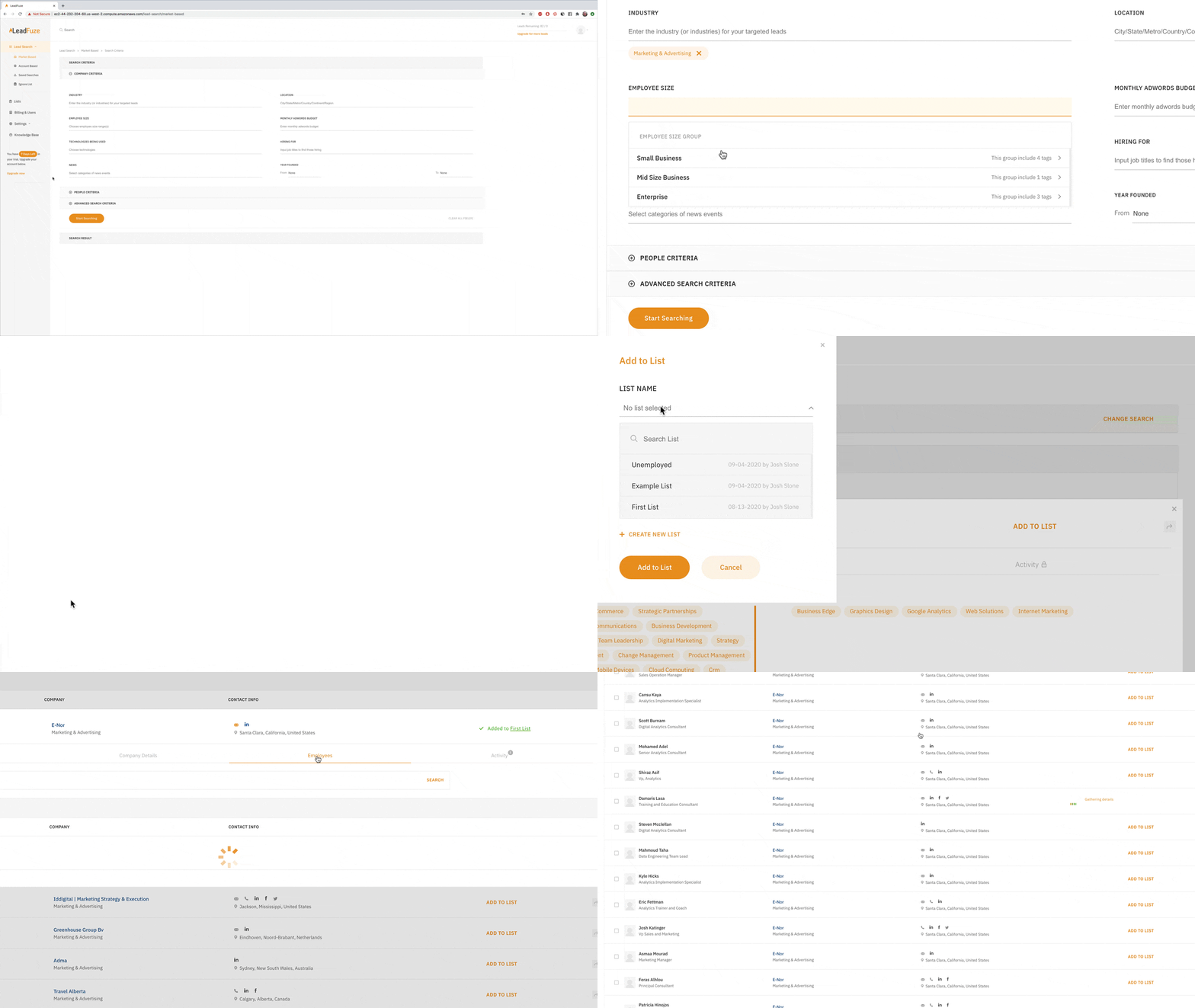
LeadFuze in action. Sign up to get 25 leads for FREE.
Aside from that, there are three primary channels any sales development representative worth their salt will use to stay on top of the minds of the qualified leads they’re working on.
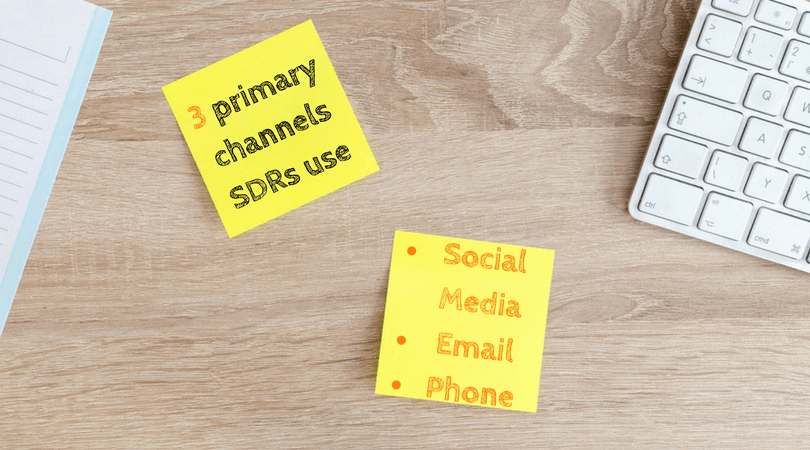
Social Media
Using networks like Twitter, LinkedIn, and (to a lesser extent) Facebook are vital in the B2B climate today— especially when it comes to the tech and software space.
Sales Development Representative’s use this tool as a means to convey knowledge, set themselves up as experts in the solution offered, and to show themselves to be relative experts in the field or industry of your leads.
For instance, if you sell inventory software for small chain restaurants, a good SDR will share valuable resources (both that belong to your company and elsewhere) to that end.
Examples of content would be:
The key is to provide extreme value, not regurgitate lame information.
Bonus Resource: CoSchedule wrote a monster blog post called 30 Social Media Engagement Tactics to Boost Shares and Conversions. It’s incredible.
The awesome thing about this type of outreach and lead nurturing is the automation factor. Using a tool like Buffer or MeetEdgar, you can literally build a library of posts and circulate them regularly.
Bonus Tip: Be sure sales reps include a bit about themselves, too. Don’t get uber personal, but showing off personality humanizes the process. They’ll likely relate better when SDRs are reaching out on an individual basis.
Another way SDRs use social media is to dig up information that could help qualify leads.
Through the use of tools and social profiles, sales reps can find contact information and scope out to see several things about individuals who are part of a target brand.
Social media, LinkedIn mostly, is great for reaching out and introducing yourself. Finding leads through research, or using a software product, will usually lead you to a prospect’s profile.
Adding them to your network and starting the conversation is a popular and effective method of introduction.
But that’s a post all to itself.
Email Outreach
Sending cold and warm-ish emails is a primary function of the SDR role.
Email and phone communication should work hand-in-hand to qualify a lead. Your sales reps should be well-versed in sending emails that get responses.
Writing emails for both outreach and the funnel sequence will be a regular part of the job description. Copywriting should be a skill that is learned and constantly improved upon.
The responses to emails help find decision makers, educate potential buyers, and warm up prospects.
Here are a few pointers to keep in mind for your Sales Development Representatives.
The headline should be punchy and enticing, but the body of the email should read like, well, an email. If your sales reps start sending long-form sales copy via the electronic mail, it’s probably spam—even if it’s good.
Focus your sales reps, not on sounding personal, but being personal. If you’re reaching out to 50-100 leads a day, it’s possible to be more intimate with each lead.
Larger mass emails may be more difficult, but more personalization typically leads to a greater response rate.
Don’t just target the decision maker. Talking with the direct and indirect influencers help good SDRs work their way into meetings and discussions among buying teams more often.
If more than one person has regular communication with an SDR, they are likely to become a prime prospect.
With sales reps writing both personal emails and filling up the pipeline with sequence content, there is a lot that can go wrong.
People who are customers could keep getting sales emails, resources could be sent twice, etc. Detail-oriented sales development reps should use a CRM like a skilled craftsman.
Phone Outreach
The phone is often the most telling part of a sales development representative’s job.
The primary responsibility for this sales role is to qualify leads. That job entails finding and filling in data of target accounts, nurturing inbound leads, and identifying both suspects and prospects.
Doing this as quickly as possible for each lead is crucial to the conversions of your company.
One of the quickest ways to qualify a lead is to have a genuine conversation with decision makers about their current solution and needs.
If you can get the right someone on the phone and ask the right questions, you’ll quickly be able to send them to close or bid them adieu. This is why sales development reps are tracked and compensated by the sales qualified appointments (SQAs) they are able to set up.
Note: If you have a detailed marketing funnel and lead scoring system, SDRs should be a liaison between the marketing and closers. The step in-between departments is often called a Sales Accepted Lead (SAL). SDRs should be able to identify the readiness of SALs extremely quickly and ship them to an SQA (now say this sentence ten time fast).
Bonus Resource: For an idea of what an ideal day looks like for a Sales Development Representative, take a look at this post from SalesHacker. It’s a pretty good reference point.
Summary
Companies, like SalesForce, have used this role within their sales team to explode growth.
Adding this step in the sales process ensures that good leads get to the pitch and bad leads get removed from the pipeline. It’s also the best way to turn lukewarm leads hot.
In order to get the full effect, it’s important to understand the role and the right people for the job.
Ideal sales teams consists of:
How does your sales team structure stack up?
Want to help contribute to future articles? Have data-backed and tactical advice to share? I’d love to hear from you!
We have over 60,000 monthly readers that would love to see it! Contact us and let’s discuss your ideas!